
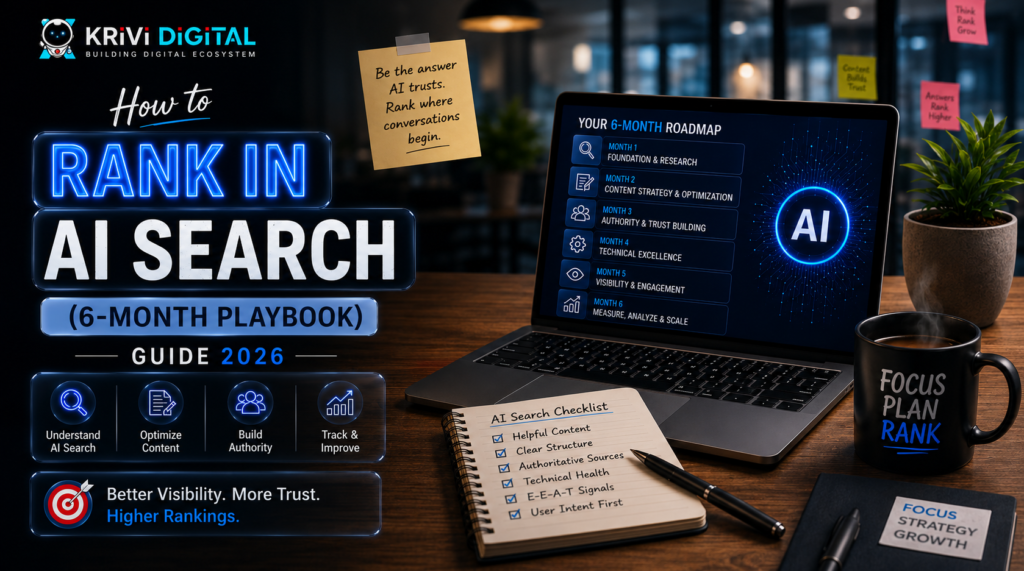
How to Rank in AI Search (6-Month Playbook) Guide 2026
Earning visibility in conversational systems requires shifting focus from legacy blue-link tracking to strategic Answer Engine Optimization (AEO) and Generative Engine Optimization (GEO). Over a 6-month operational window, brands must benchmark their conversational Share of Voice, unblock AI web scrapers, fix complex index bottlenecks, inject unique information gain, and deploy hyper-structured topic hubs. Discover the ultimate playbook engineered by Krivi Digital to scale direct citations across ChatGPT, Perplexity, and Google AI Overviews.
The digital ecosystem is experiencing its most seismic transformation since the commercialization of the World Wide Web. Traditional search engine results pages are rapidly ceding user attention to real-time synthesis models. For forward-thinking enterprises, learning how to rank in ai search has shifted from an experimental marketing tactic to a fundamental requirement for baseline digital survival.
When users interact with large language models, they completely bypass conventional, ad-cluttered page listings. To win visibility within this shifted landscape, brands must align with a sophisticated digital marketing agency that understands the mechanics of data retrieval, indexing, and model synthesis. At Krivi Digital, we provide the absolute best digital marketing in lucknow, designing data-dense frameworks that position our clients as the definitive answers to complex conversational prompts.
This exhaustive 6-month playbook breaks down the exact operational phases, technical schema, and content workflows required to establish undeniable authority across Google AI Overviews, ChatGPT, Perplexity, and Claude.
Month 1: Advanced Auditing and Goal Setting
The foundational 30 days of your transformation are strictly data-driven. Your focus must center on establishing exact visibility baselines, defining mathematical growth targets, and clearing away hidden technical configurations that block conversational user-agents.
1. Benchmark Your Current Visibility in AI Search
You cannot optimize what you do not empirically measure. Manually typing target keyword phrases into web-based conversational prompts to see if your brand is mentioned is highly inaccurate and impossible to scale.
To automate and track your footprint across LLM index systems, you must deploy advanced enterprise-level analytics. Best AI Tools like Semrush’s Enterprise AIO are explicitly built to track multi-engine citation parameters. For smaller localized campaigns, the mid-tier AI Visibility Toolkit provides clean data access.
Set up your automated enterprise analytics project using this explicit configuration flow:
- Input your core transactional, commercial, and informational semantic clusters.
- Select your target conversational surfaces, specifically activating Google AI Mode, Google AI Overviews, Perplexity AI, and ChatGPT.
- Allow the monitoring nodes to process real-time prompt generation over several hours to normalize baseline visibility metrics.
Once data normalization completes, your central command dashboard will present a matrix of core metrics that outline your current market footprint:
| Algorithmic Metric | Core Definition & Strategic Utility |
| Share of Voice (SoV) | Measures the percentage of total user attention your brand commands within generative synthesis answers. It weighs both reference presence and positional layout priority. |
| Source Visibility | The absolute mathematical percentage of your tracked keyword prompts where your core domain is explicitly cited as a trusted source. |
| Referral Traffic | The raw volume of web users executing direct click-through operations from conversational inline citation links to your server. |
| AI Visibility Score | A weighted composite matrix score graded from 0 to 100, tracking your global ecosystem dominance relative to your direct market competitors. |
Record these exact data layers inside your marketing playbook template. This initial dataset serves as the absolute baseline against which all future technical performance will be audited.
2. Establish High-Intent Conversational Visibility Targets
With your initial performance numbers documented, map out your specific, measurable growth targets for the end of the 6-month optimization loop. Vague goals like increase brand visibility fail to drive results your performance targets must be numerically precise.
When executing an enterprise campaign managed by an elite digital marketing agency in lucknow, run your baseline projections against these realistic growth metrics:
- Share of Voice (SoV) Scaling: Target an absolute net expansion of 15 to 20 percentage points above your current baseline. If your tracking shows a baseline of 35%, target a clear operational goal of 50% to 55%.
- Source Visibility Expansion: Aim for a 15 to 20 percentage point scale-up. Elevating this data point ensures that conversational systems utilize your content assets to validate a wider range of prompts.
- Referral Traffic Growth: Target a 50% to 60% net expansion in referral sessions coming directly from generative citation layers.
- AI Visibility Score Improvement: Target an increase of 3 to 5 full points. Because this composite index aggregates multiple tracking variables, small numeric increases reflect massive changes in competitive market position.
Document these specific targets within your project template. Revisit these goals at the mid-point of Month 3 and the end-point of Month 6 to keep your marketing teams aligned.
3. Verify and Optimize AI Crawler Accessibility
Your business cannot earn citations within generative search engines if the underlying automated scrapers are physically blocked from reading your code. Ensuring unhindered crawler access is a basic technical requirement.
Retrieval systems and search bots continually browse the public web to index data arrays into multi-dimensional vector databases. If your server configurations block these user-agents within your root directory files, your information remains invisible during real-time generation phases.
Open your core configuration parameters by navigating to [yourdomain.com/robots.txt](https://yourdomain.com/robots.txt) in a web browser. Systematically review the plain-text file for restrictive, anti-scraping strings. A typical error looks like this:
Critical Disallow Error to Avoid:
User-agent: Claude-SearchBot
Disallow: /
This specific instruction completely blocks the Anthropic user-agent from crawling any content strings hosted on the server. Inspect your configuration files for matching lines targeting critical search agents, including:
- Googlebot (Google search indexing)
- OAI-SearchBot (OpenAI search retrieval agent)
- PerplexityBot (Perplexity deep-crawl mechanism)
- ClaudeBot / Claude-SearchBot (Anthropic data gathering agents)
If your root directory blocks any of these conversational user-agents, eliminate those lines from your configuration files immediately. Log these adjustments within your technical project management records.
4. Audit Your Site Architecture for Crawling and Indexing Bottlenecks
A perfectly clean robots.txt file does not automatically guarantee that your site is fully indexed. Complex code-level bugs within your content management system can still cause severe crawling bottlenecks for automated agents.
Initiate an enterprise-wide technical crawl using robust web auditing platforms like Semrush Site Audit. Once the diagnostic scan concludes, open your analytics reporting dashboard to identify and fix four critical crawling bugs:
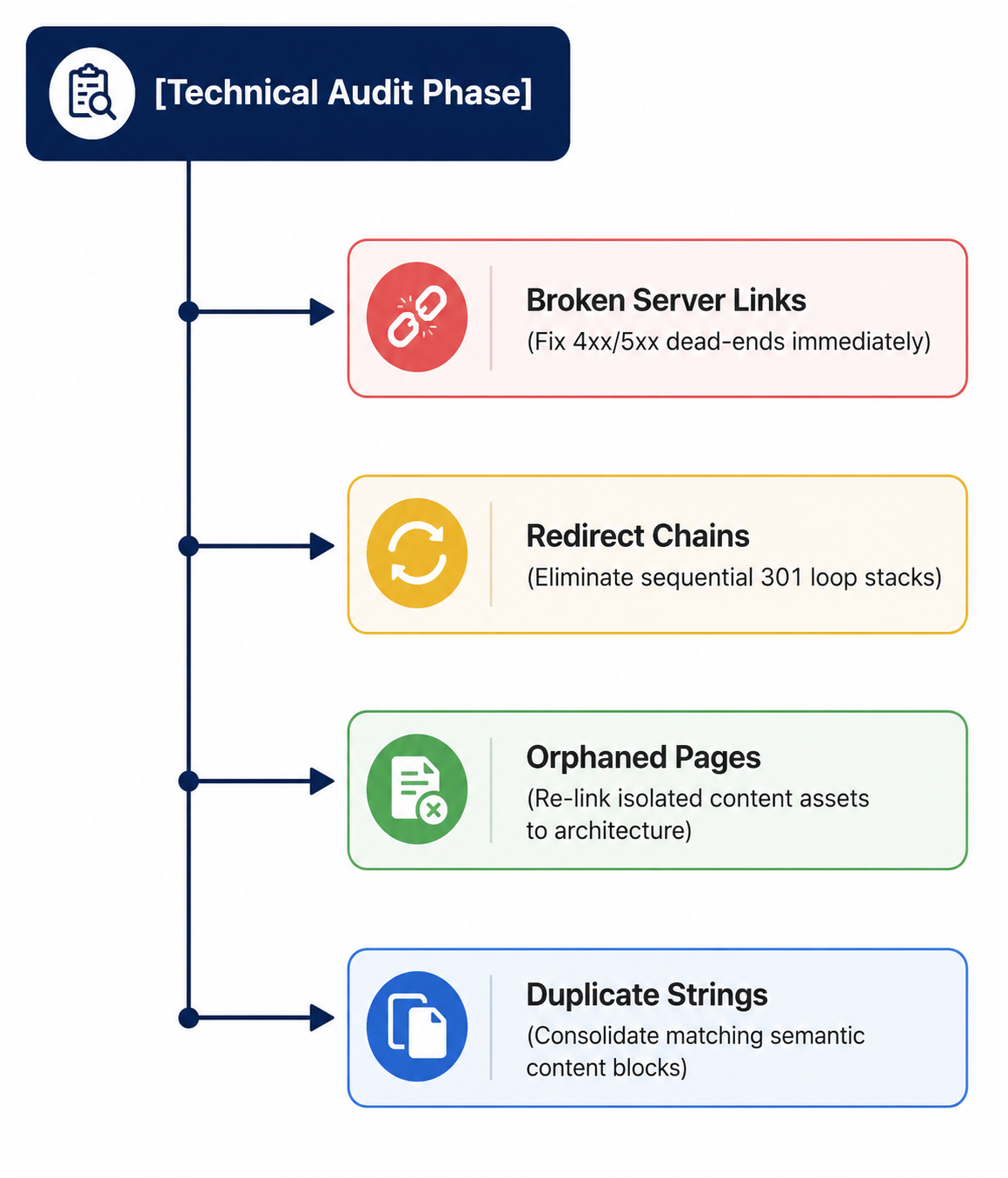
- Broken Server Links (4xx and 5xx Errors): These response codes present sudden dead-ends for search bots, terminating their crawling paths and degrading your overall crawl budget efficiency.
- Redirect Chains: Sequential loops of multiple 301 or 302 directives force bots to execute repeated handshakes, causing automated crawlers to abandon the path entirely.
- Orphaned Content Assets: Pages completely disconnected from your internal link structure remain isolated, making them virtually undiscoverable for search engine crawlers.
- Duplicate Content Strings: Identical text arrays across multiple URLs confuse retrieval bots and dilute your primary page authority.
Log every technical error inside your tracking spreadsheet and assign them to your development team for immediate resolution.
5. Evaluate Brand Accuracy Across Conversational Engines
Earning wide citation visibility is counterproductive if the answers being generated about your company are incorrect or outdated.
Because conversational search engines gather training datasets from disparate web properties, they are prone to hallucinating or serving outdated information. Systems may state inaccurate pricing scales, describe discontinued services as active, or misrepresent competitive comparisons.
To map exactly how your brand is being presented to users, run a comprehensive brand accuracy audit across all major engines using these exact prompt structures:
- “What is the core value proposition of [Your Brand Name]?”
- “Is [Your Brand Name] an effective solution for [Specific Enterprise Use Case]?”
- “Provide an objective analysis of [Your Brand Name] versus [Primary Competitor].”
- “What is the current corporate pricing structure for [Your Brand Name]?”
Every time an engine serves an incorrect answer, log the data point inside your tracking spreadsheet. Document the platform used, the prompt executed, the false assertion made, the referenced source URL, and the corrected data statement. Keep this record secure; we will deploy specific remediation frameworks in later steps.
6. Audit High-Performance Pages Fueling Current Citations
In nearly every digital marketing model, a precise subset of core landing pages handles the vast majority of all citation actions across conversational answers.
Using the Semrush Enterprise AIO platform, navigate directly to the “Prompt Tracking” option, select “Sources,” and access the “URLs” sub-report. Filter this interface to isolate performance data exclusively matching your root web domain.
Analyze this high-performing URL array to uncover underlying structural footprints:
- Are these assets relying on dated datasets or static industry metrics that require immediate updating?
- What specific structural templates dominate the citation ecosystem? Do the algorithms favor structured tabular arrays, detailed bulleted lists, technical deep-dives, or curated definitions?
Document these structural footprints clearly. Understanding what these retrieval models already favor allows you to successfully replicate those exact layouts across your wider site architecture.
7. Audit Your Brand Mentions Across the Web
Your off-site footprint across external web properties heavily influences your authority profile inside generative models. You must track two specific mention categories:
- Linked Mentions (Backlinks): Clickable source anchors hosted on external domains that route users back to your web servers.
- Unlinked Mentions: Plain-text references to your company name, brand assets, or executive teams without an accompanying hyperlink.
Both formats serve as key signals for conversational models seeking to map real-world entity associations. To identify your linked footprint, run your root domain through the Semrush Backlinks analytics interface, sorting specifically for brand anchor terms. To track unlinked citations, configure a tracking workspace inside the Semrush Brand Monitoring module.
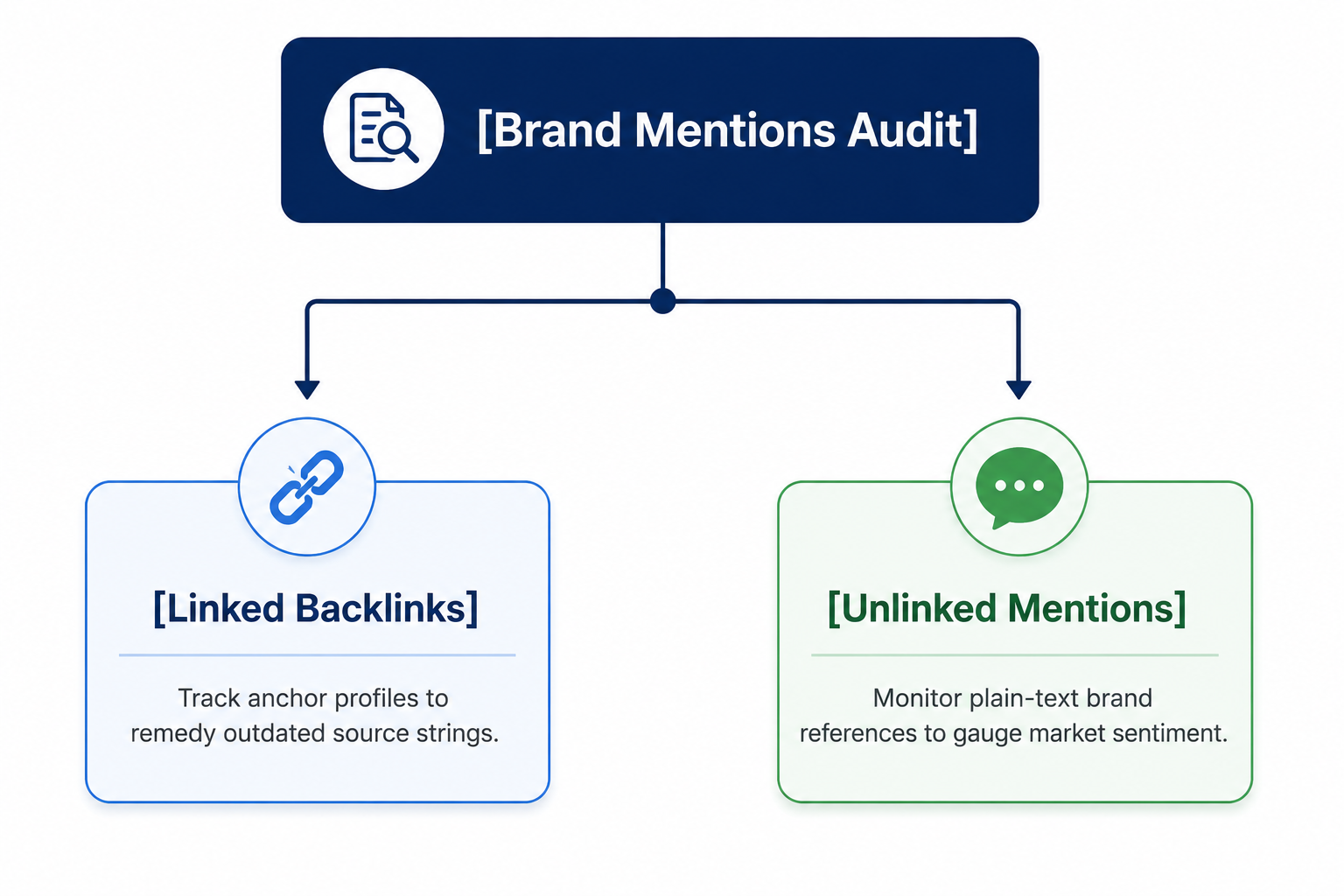
Analyzing these off-site strings allows you to identify digital PR opportunities, discover who is discussing your brand with positive sentiment, and find outdated industry references that require manual correction. Log these external referring domains safely within your operational template.
Month 2: On-Site AI SEO
With a complete data baseline established, dedicate Month 2 entirely to executing highly targeted structural refactoring across your existing landing pages. The goal here is to optimize your content layouts so conversational algorithms can seamlessly parse and extract your information.
8. Optimize Key Content Assets for Algorithmic Retrieval
Prioritize optimization efforts for your highest-value corporate assets: your homepage, transactional service landing pages, and long-form informational guides targeting high-intent commercial concepts.
Map these specific URLs inside your tracking workspace and implement these structural content transformations across every target asset:
- Enforce Strict Hierarchy: Format your content with logical heading tags (<h2> and <h3>). Ensure every heading clearly and descriptively declares the topic covered in the subsequent text block. Break long text walls into concise paragraphs containing no more than two to four sentences. Integrate organized bullet points and numbered sequences where appropriate.
- Utilize Clear Declarative Sentences: Avoid ambiguous prose, confusing idioms, or overly complex metaphors. Use direct, unambiguous sentence structures to help retrieval models parse and cite your content with high confidence.
- Prioritize Concise Information Density: Generative search engines naturally favor concise, substance-dense explanations over fluff. Eliminate empty filler words while ensuring your topic is explained with absolute completeness.
- Inject Distinct Information Gain: This factor is absolutely critical for informational blog articles. Information gain requires adding unique data points, proprietary case studies, expert interviews, or distinct analytical angles that do not exist on competing websites covering the same topic.
- Embed Relevant Entity Context: Explicitly mention related corporate tools, industry frameworks, historical pioneers, and foundational concepts within your body copy. This helps machine-learning systems properly categorize your content within their wider knowledge graphs.
While optimizing for generative search, maintain standard, foundational search engine optimization best practices across your primary code elements:
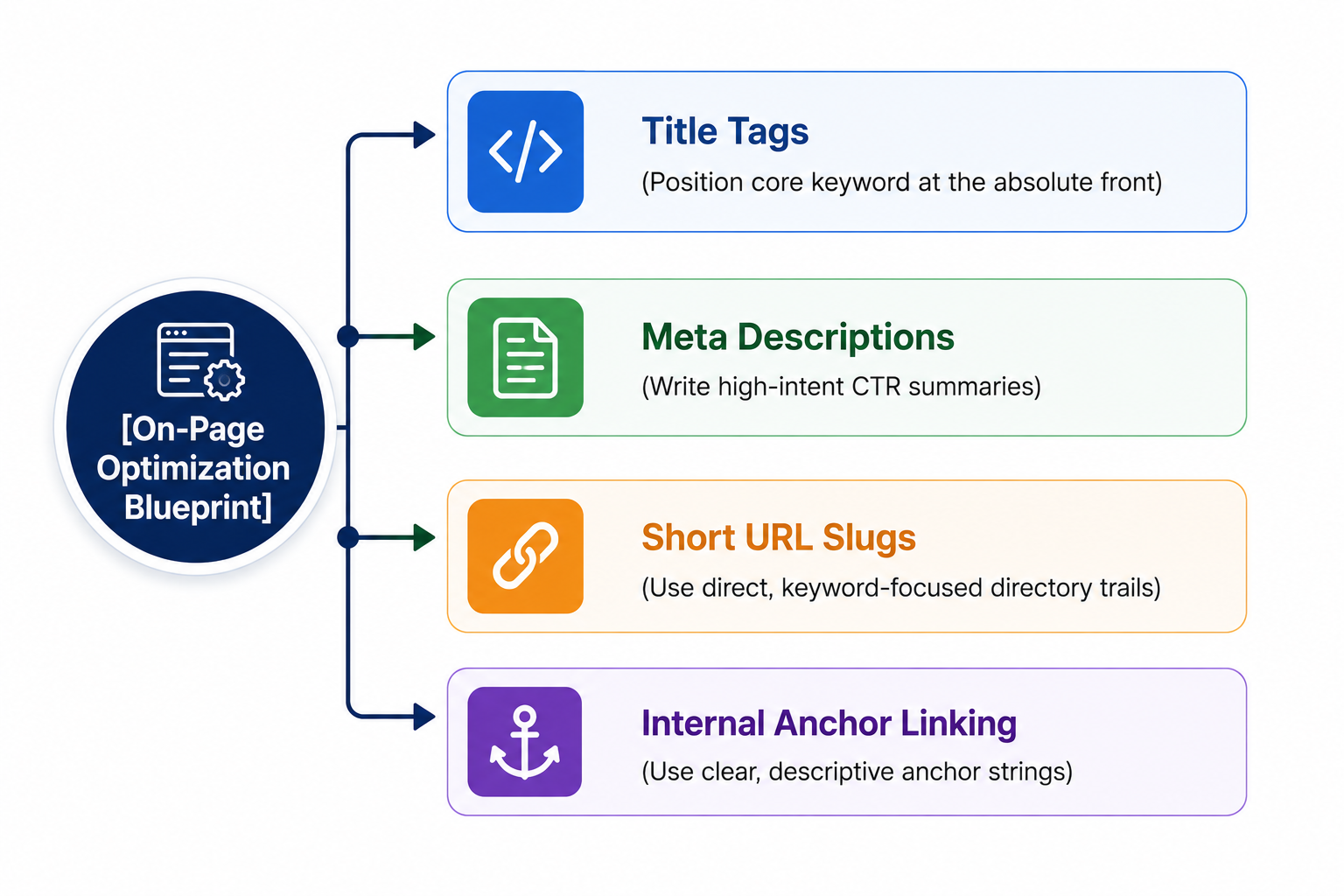
Track the completion status of these page-level enhancements directly within your master optimization template to maintain a clear view of your progress.
9. Deploy Enterprise Schema Structural Markup
Implementing advanced schema markup is a foundational step for any comprehensive lucknow digital marketing strategy. Adding this structured data directly to your HTML code helps AI scrapers instantly interpret the underlying context of your content.
Deploy a schema generation tool to construct accurate JSON-LD code blocks. Integrate these relevant object types based on the specific function of each target URL:
- Article Schema: Deploy on editorial entries, research write-ups, and blog content.
- FAQ Page Schema: Mandate on any asset utilizing an explicit question-and-answer layout.
- HowTo Schema: Integrate across step-by-step instructional tutorials and technical process blueprints.
- Product Schema: Apply across transactional e-commerce configurations and specialized software tool pages.
- Organization Schema: Embed directly on your main corporate homepage to reinforce baseline brand entity parameters.
Review this standard, compliant JSON-LD code block configured for an enterprise product asset:
JSON
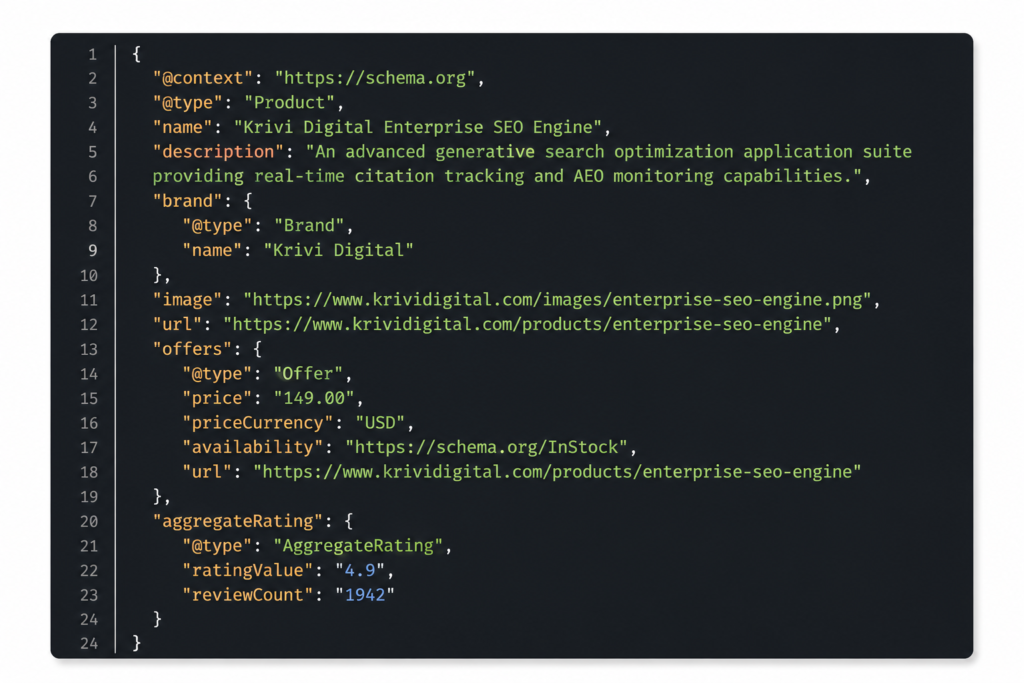
Once you deploy these structured code strings into your page headers, validate the implementation using Google’s Rich Results Test to fix any formatting bugs. Log every completed URL configuration within your master project workspace.
10. Architect a Highly Crawlable Internal Site Structure
Refactor your site architecture to build a highly logical internal link structure, allowing automated crawlers to discover your content with maximum efficiency.
Organize your digital assets into a clean, intuitive, hierarchical structure. Ensure your core root domain references main category index interfaces, which subsequently link directly down to your individual resource nodes.
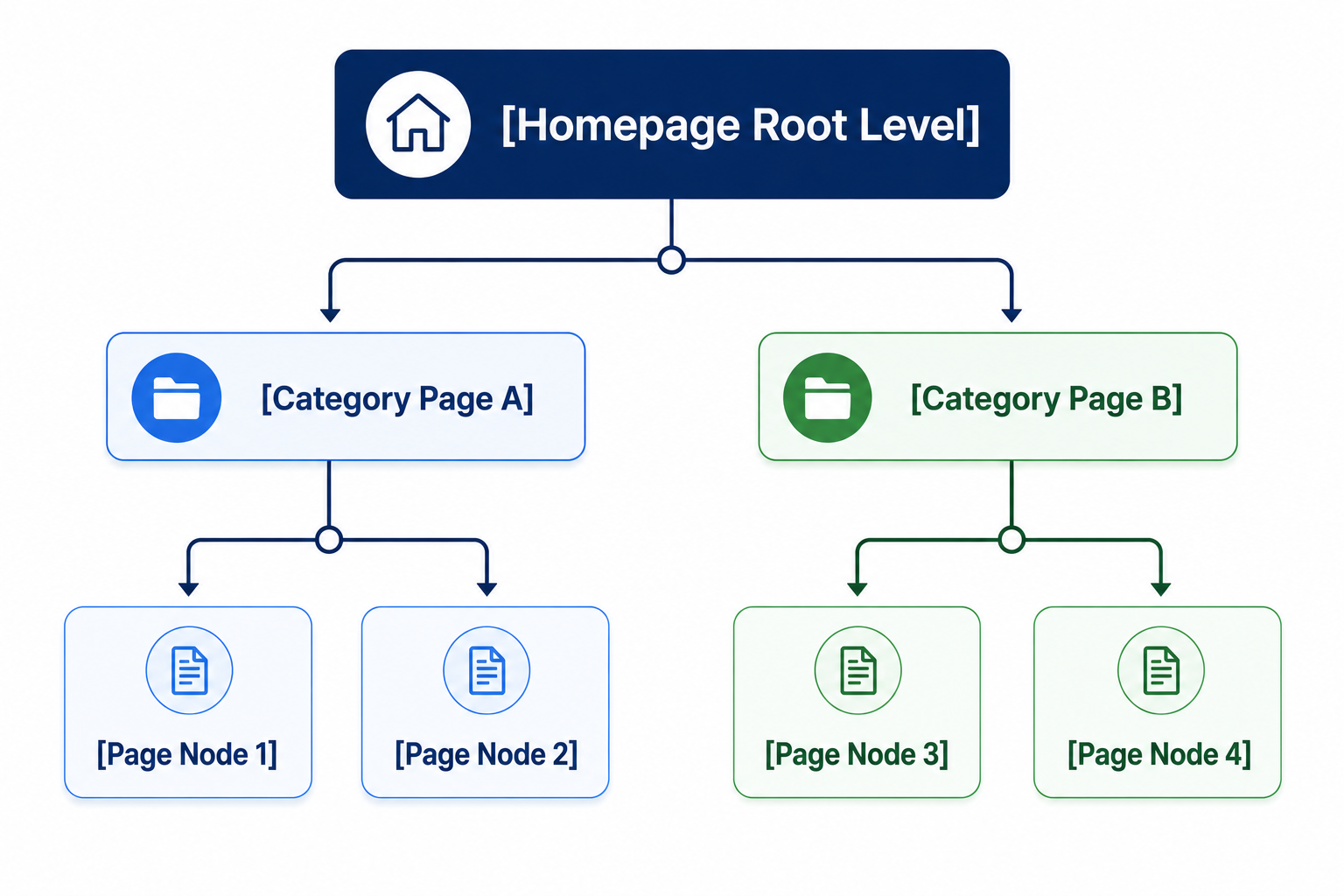
Avoid deep directory structures where key content is buried far below the surface. Keep your highest-value landing pages accessible within a maximum of two to three click paths from the homepage root.
Additionally, maximize the value of your global footer navigation area. Include direct internal links to high-performance articles, service landing pages, and head-to-head product comparison grids within this section. Because footer links display uniformly across every URL on your domain, they create consistent internal crawling pathways for AI agents. Document all planned structural updates inside your master template.
Months 3 & 4: Content Creation & Topical Domination
With your technical architecture polished, dedicate Months 3 and 4 entirely to creating highly authoritative content assets. This phase focuses on refreshing legacy content and building structured hubs that demand citation placement.
11. Execute a Comprehensive Legacy Content Refresh
Regularly updating your older content ensures that your pages remain accurate, relevant, and highly citable. When conversational models pull outdated information from your domain, it damages brand credibility and can cause you to lose citations to competitors with newer data.
Begin this optimization process by targeting the high-performance citation URLs you identified during Month 1. Work systematically through your content database, applying these specific updates:
- Remove obsolete data points and replace any statistics over two years old with verified current metrics.
- Update operational guidance, software walkthroughs, and industry recommendations to reflect current standards.
- Swap out dated case studies for modern examples that clearly illustrate your points.
- Replace old screenshots and system user interface images with current visual representations.
- Add dedicated sections to address emerging sub-topics and recent industry shifts.
- Update the technical metadata to display the current publication date, clearly signaling freshness to both human readers and AI agents.
Track your updates systematically inside your master playbook template to monitor your optimization progress across the site.
12. Create Content Typologies Favored by AI Retrieval Models
To maximize your chances of being cited, align your content production with the specific formats that conversational algorithms natively prefer.
Expand your visibility research beyond your own domain. Anchor engine optimization strategies dictate that you must analyze competing web pages that are successfully earning citations for your target search queries by auditing the Semrush Enterprise AIO report screens.
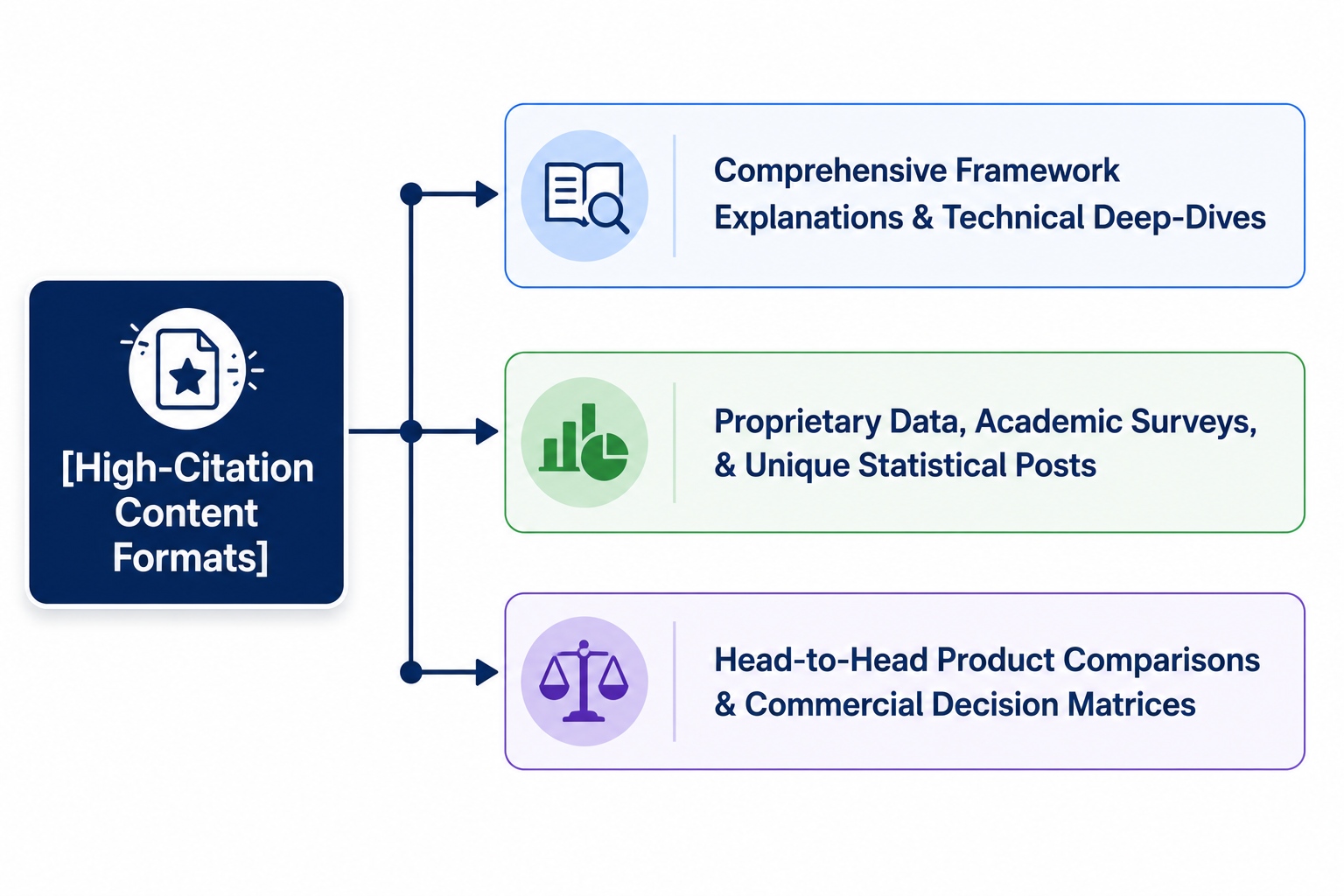
Identify the dominant structural formats within your industry niche, and double down on building highly detailed assets using those exact layouts.
Additionally, expand your distribution channels beyond written website articles. Repurpose your core insights into high-quality YouTube videos, long-form LinkedIn posts, and informative threads on X. Conversational engines routinely ingest and cite social video and professional networking platforms when serving answers.
13. Build Authoritative Topic Clusters and Content Hubs
Deploying comprehensive content hubs is a highly effective way to build undeniable topical authority across your core business concepts.
An effective hub architecture requires a high-level pillar page that covers a broad industry topic comprehensively. This pillar then links out to dedicated cluster sub-pages that dive deep into specific related concepts, with each sub-page linking back to the central pillar.
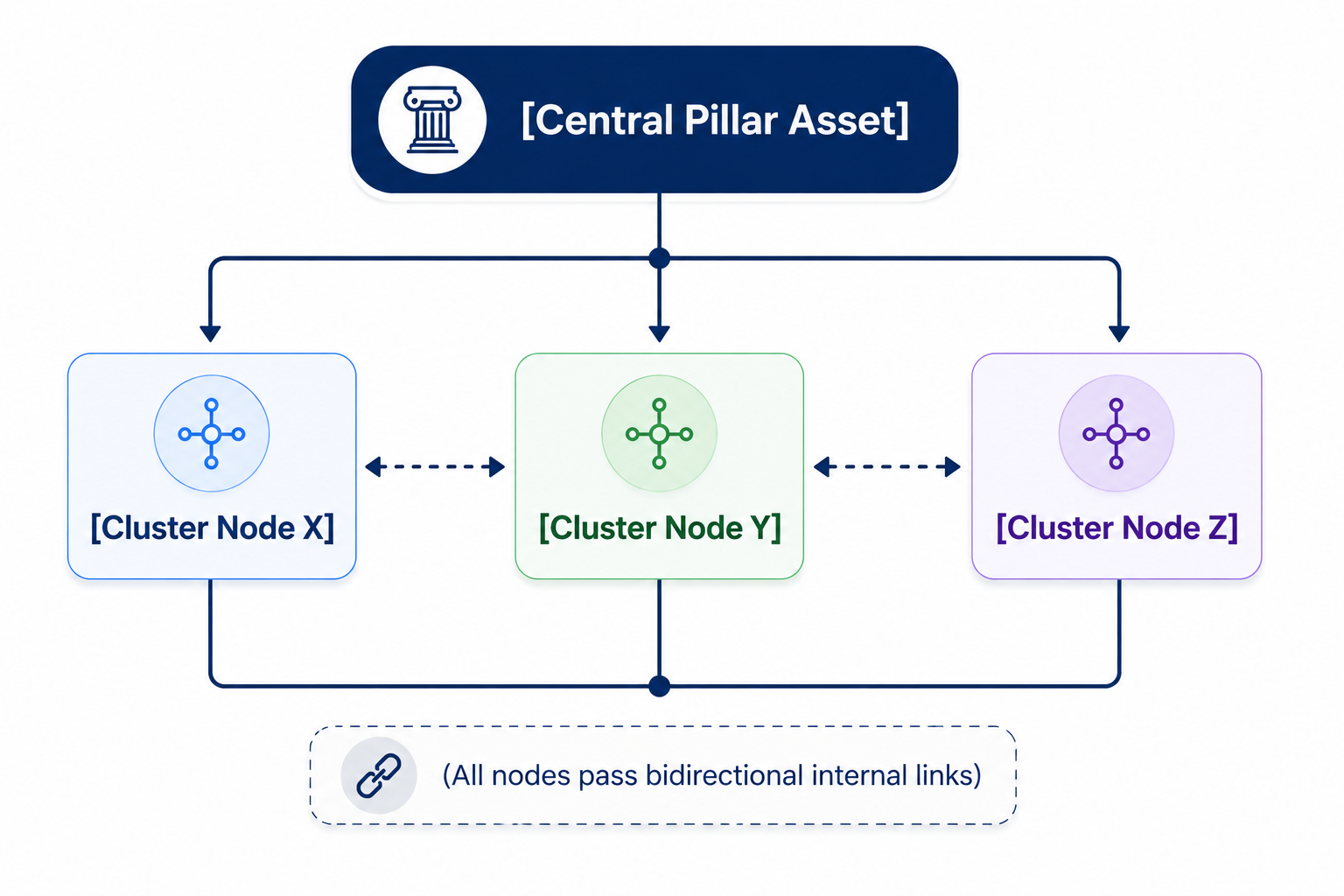
To execute this strategy cleanly:
- Select three to five broad high-value core industry topics to serve as your foundational pillar pages.
- Map out five to ten highly focused sub-topics for each pillar to serve as your cluster pages.
- Write an exhaustive highly structured pillar guide that links naturally out to every sub-topic.
- Build out your cluster pages ensuring they cover each sub-topic in detail.
- Connect your cluster nodes back to the main pillar using descriptive keyword-rich anchor text.
Validate your semantic topic selection using the Semrush Keyword Magic Tool, and document your structural map within your optimization template.
14. Uncover and Answer High-Intent AI Conversational Prompts
To earn citations inside generative answers, optimize your content to address the exact questions users pose to AI platforms.
Use specialized applications like Semrush’s Prompt Research tool to discover these conversational queries. Input your core target themes to extract a clean list of real-world prompts used across various platforms.
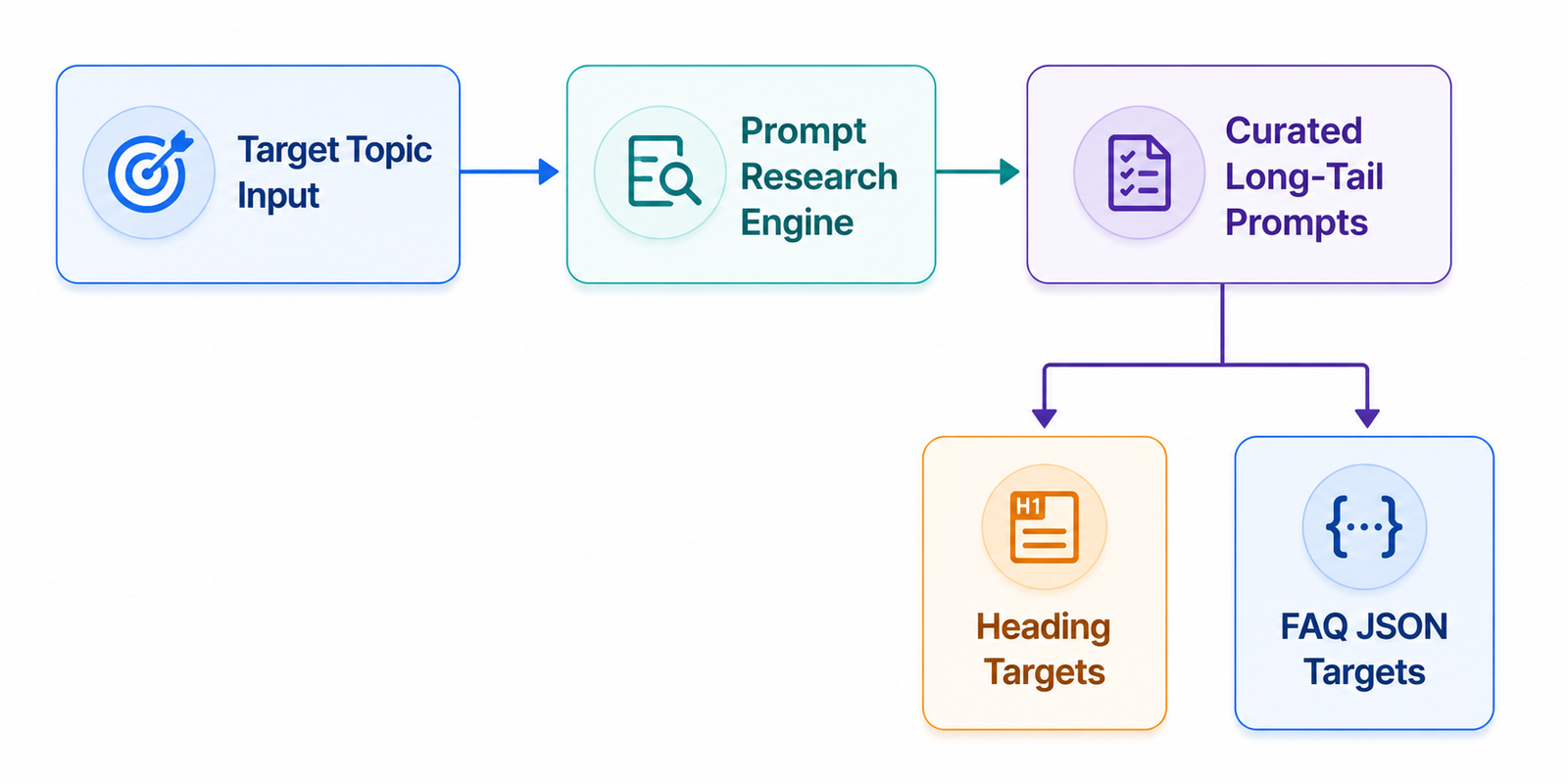
Select three to five high-intent prompt questions for every article you write. Use these questions as exact sub-headings throughout your content, and provide direct, factual answers immediately below them.
15. Format Content for Seamless Algorithmic Extraction
Structure your content layouts cleanly to make it incredibly easy for AI retrieval bots to extract and serve your information.
Adhere closely to these technical formatting best practices:
- Deploy Question-Based Headings: Use exact, clear conversational phrasing within your <h2> and <h3> tags.
- Provide Immediate Answers: State your core answer block directly within the first sentence of a section before diving into deeper context or supporting examples.
- Use Clear Bulleted Lists: Break down sequential steps, core features, or multi-item lists into clean bulleted lists.
- Write Concise Paragraphs: Keep your text blocks to a maximum of two to four sentences to avoid overwhelming parsing algorithms.
- Utilize Structured Tables: Present data comparisons, matrix options, or pricing structures within clean HTML tables to ensure seamless data scanning.
Log every page optimization update inside your master tracking template to keep your execution metrics organized.
16. Build Unshakeable Quality and E-E-A-T Signals
To build trust with both search engines and generative models, align your content production with the core principles of the E-E-A-T framework: Experience, Expertise, Authoritativeness, and Trustworthiness.
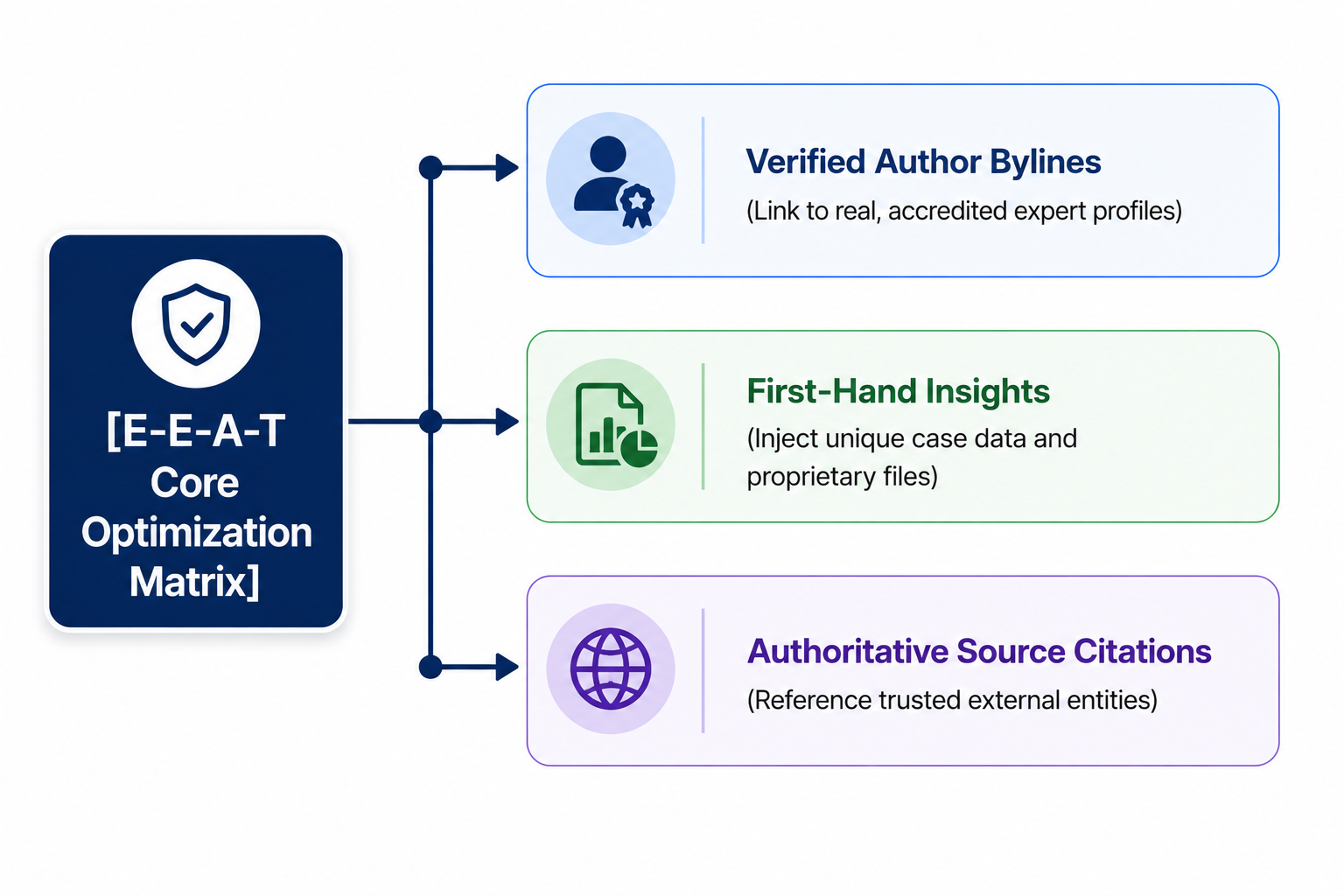
- Include Verified Author Bylines: Attach a detailed author bio to every piece of content, highlighting their professional credentials, years of industry experience, and academic background.
- Inject First-Hand Insights: Infuse your articles with real-world case studies, proprietary company data, and unique expert commentary.
- Reference Authoritative Sources: Back up your claims by linking out to trusted industry organizations, official documentation, and primary academic studies.
Document all completed author bio deployments and updated validation links clearly within your tracking template.
17. Execute a Multi-Platform Content Repurposing Plan
Maximize the reach of your optimized web articles by transforming them into multiple digital content formats across different platforms.
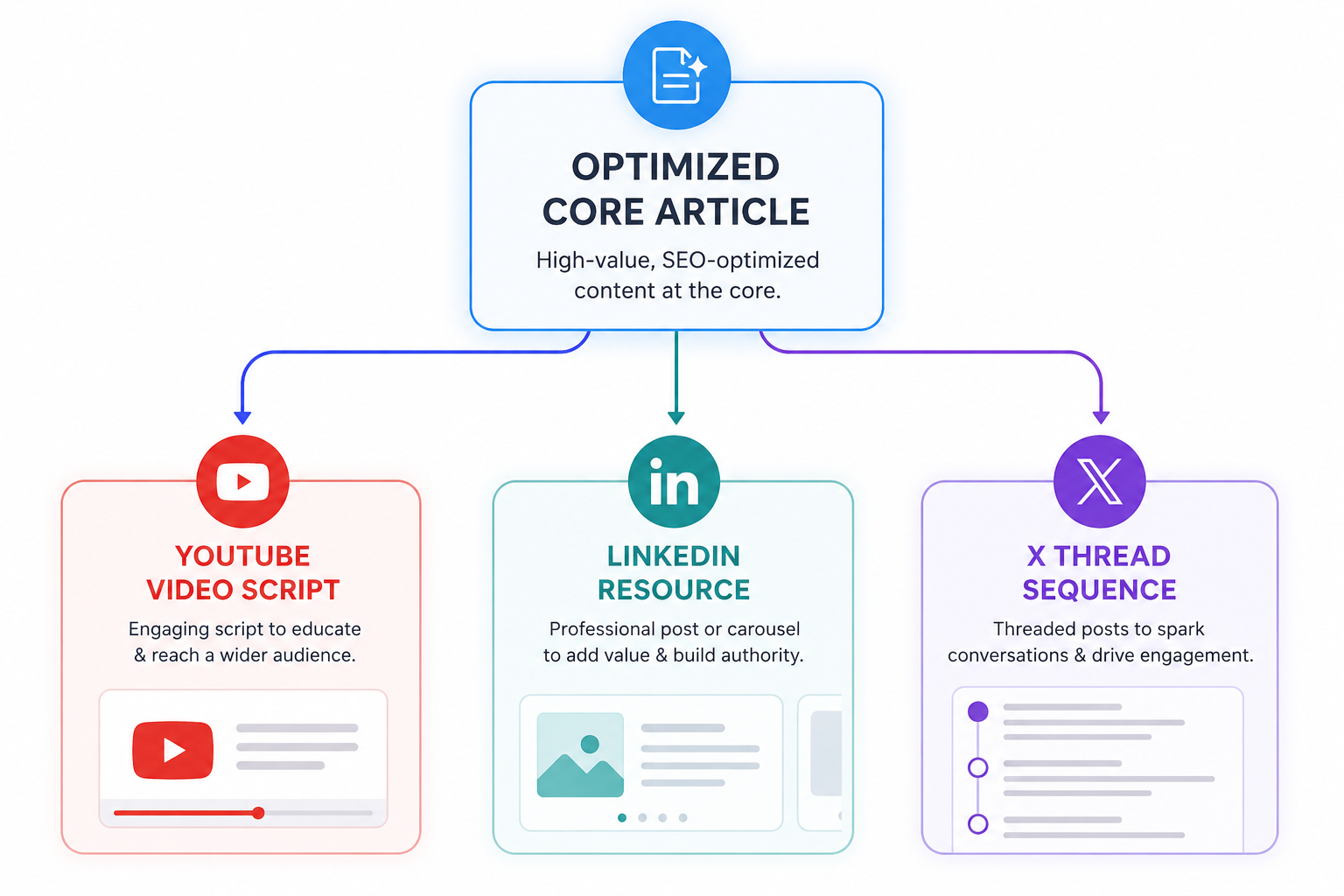
Convert your written guides into engaging video scripts for YouTube, polished professional articles for LinkedIn, and concise, data-driven threads for X. Distributing your insights across these platforms creates multiple opportunities for AI engines to discover and cite your brand. Track your multi-channel assets using your master management sheet.
Month 5: Off-Site Activities & Digital PR
During Month 5, shift your focus off-site to build authority and presence across external web platforms, directly influencing how AI systems view your brand.
18. Build High-Quality Links and Authorized Brand Mentions
Earning backlinks and unlinked brand mentions on highly reputable web domains is critical for establishing your brand’s authority within generative search graphs.
Deploy these targeted off-site outreach strategies:
- Revisit the baseline link analysis you conducted during Month 1, and connect with editors who already mention your brand to explore new content partnerships.
- Connect with the managers of reputable industry directories and comparison websites to secure inclusion for your brand in relevant “best of” lists and product roundups.
- Execute targeted digital PR campaigns by pitching unique research stories and expert insights to major industry publications.
- Contribute high-value guest columns and expert commentary to authoritative industry blogs.
Track all your outreach initiatives, communication logs, and acquired backlinks within your master template.
19. Clean Up Brand Misinformation on Third-Party Websites
Correcting inaccurate or outdated information about your brand across the web prevents generative models from picking up and spreading false data about your business.
Review the brand accuracy audit you conducted in Month 1, and contact the editors of websites hosting incorrect details about your business. Use this clear, professional communication template to request updates:
Subject: Correction Request: Your Brand Name Information Update
Hi (Editor Name),
My name is (Your Name), and I am the (Your Title) at (Your Company Name).
I recently read your resource page covering [Article Title] and noticed a few outdated details regarding our business operations.
- (Incorrect Detail #1) should be updated to (Correct Current Data Point).
- (Incorrect Detail #2) should be updated to (Correct Current Data Point).
Could you please update these details to ensure the information remains accurate for your readers? I would be happy to provide any supporting documentation you need.
Thank you for your time and help.
Warm regards,
Your Name
Your Title
Your Company Name
Log your link cleanup requests and monitor the status of business directory updates within your master tracking sheets.
20. Participate Consistently in Authoritative Community Forums
High-traffic community discussion platforms like Reddit and Quora are frequently crawled and cited within generative search answers. Participating regularly in these communities helps establish your brand’s presence in relevant industry conversations.
(Identify 20-30 Relevant Threads) ──► (Provide Factual Insights) ──► (Earn Citations)
Identify 20 to 30 active, high-engagement discussion threads related to your business niche. Focus purely on providing genuinely helpful answers and practical advice without being overly promotional, mentioning your brand only when it adds real value to the user’s question. Track your community interactions inside your playbook template.
Month 6: Analysis and Keeping the Momentum
21. Measure Post-Campaign Metrics Against Your Baseline
During the final month of your campaign, pull your updated visibility metrics from Semrush Enterprise AIO and compare them directly against the baseline data you recorded in Month 1.
Calculate your net growth across Share of Voice, Source Visibility, Referral Traffic volume, and overall AI Visibility Scores.
[Month 1 Baseline Metrics] ◄──────(Comparative Analysis)──────► [Month 6 Final Metrics]
Identify your highest-performing content pages and pinpoint which optimization tactics yielded the strongest traffic growth to help shape your long-term marketing strategy.
22. Adapt Your Strategy to Evolving Algorithmic Shifts
Because conversational search algorithms are constantly evolving, you must review your optimization frameworks every month to stay ahead of new platform updates.
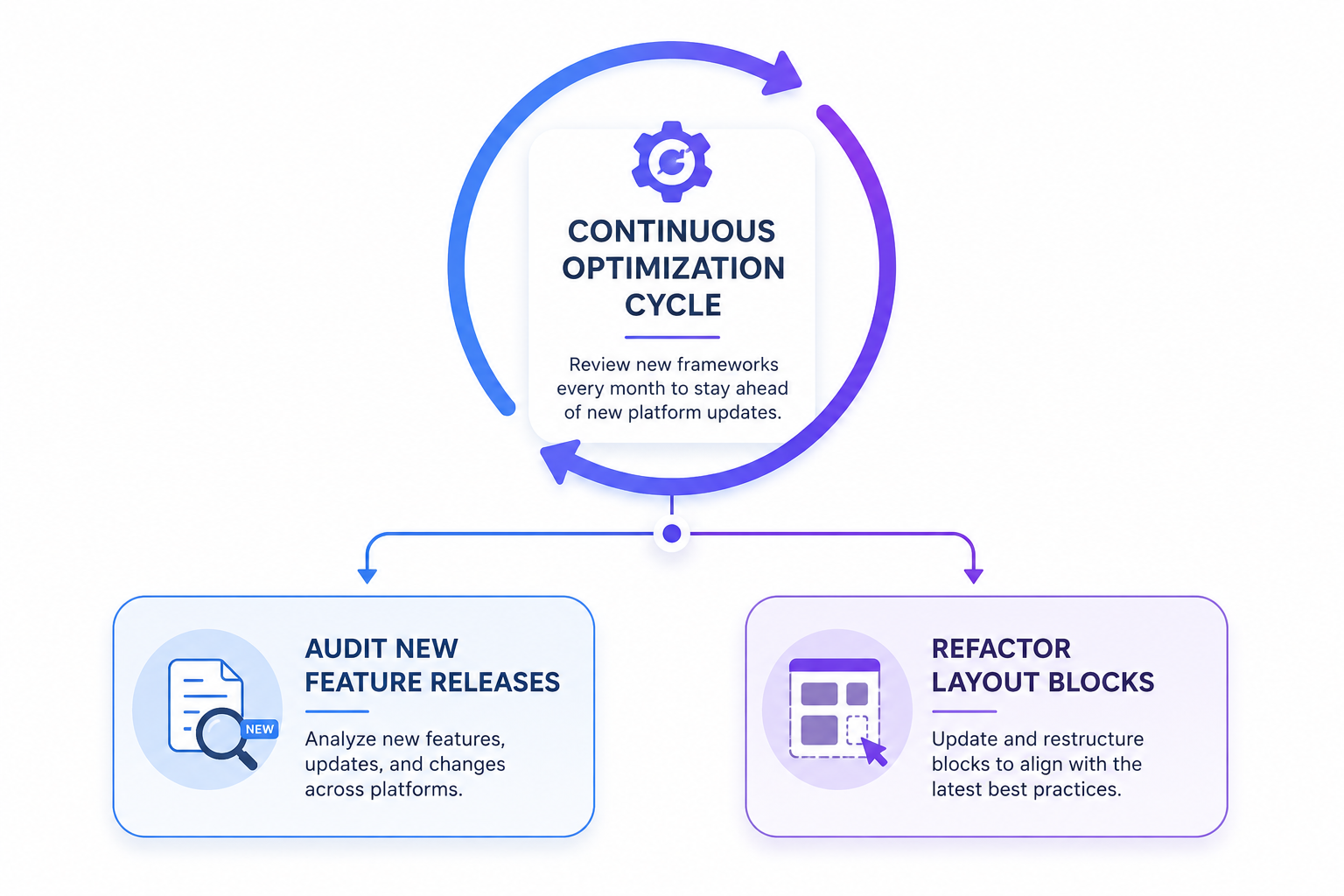
Monitor major platform updates from Google, OpenAI, and Perplexity, and refine your content formatting schemas continuously to maintain dominant visibility across your industry market space.
Modern Search Optimization: Myths vs Reality
| Common Industry Myth | Algorithmic Reality |
| Third-party optimization scores match real search engine data. | These numbers are proprietary metrics calculated by independent software tools. Search engine algorithms do not look at these scores when making ranking decisions. |
| You can buy backlink packages to instantly guarantee top positions. | Buying links violates search engine policies and can lead to severe manual penalties that completely tank your visibility. |
| Maintaining a rigid keyword density score guarantees ranking success. | Search engines evaluate the overall helpfulness and structural quality of content rather than tracking exact keyword percentages. |
| AI-generated content cannot rank in modern search. | Content ranks based on its depth, accuracy, and adherence to the E-E-A-T framework, regardless of how it was drafted. |
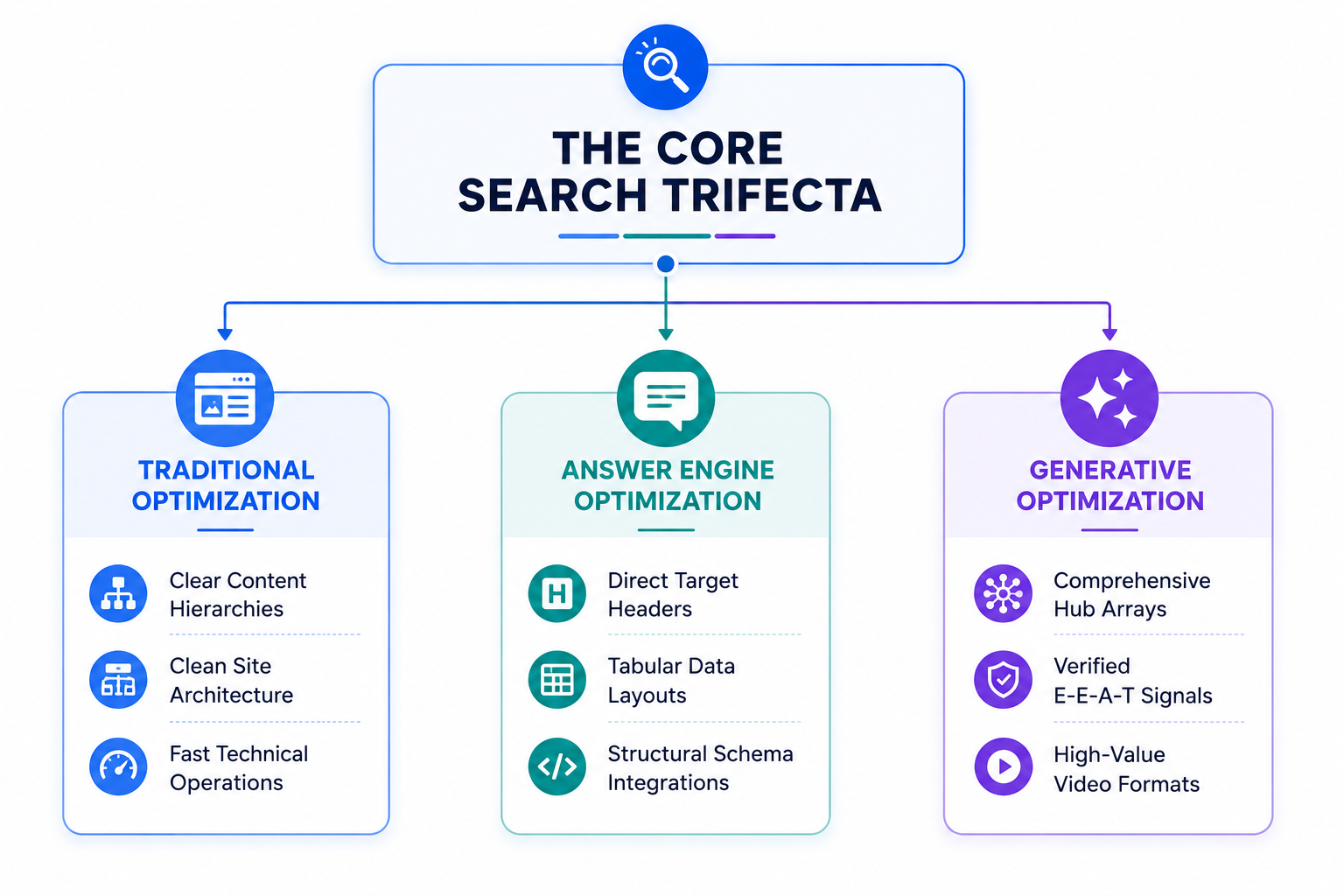
The Conversational Optimization Framework
Your 90-Day Quick Launch Plan
Phase 1: Foundational Technical Polish (Weeks 1 – 2)
- Configure your Google Search Console workspace and resolve any crawling errors or broken links.
- Audit your server setup configurations and update your robots.txt file to ensure all AI bots can access your site.
Phase 2: Structural On-Page Enhancements (Weeks 3 – 4)
- Add concise summary blocks to the top of your highest-value content pages to satisfy retrieval bots.
- Integrate complete FAQ schema markup across your primary resource articles to capture snippet placements.
Phase 3: Content Expansion & Authority Building (Month 2)
- Launch an authoritative topic cluster by deploying a core pillar guide supported by highly detailed sub-pages.
- Set up detailed author schema profiles to reinforce your brand’s expertise and credibility.
Phase 4: Off-Site PR & Brand Asset Verification (Month 3)
- Claim and optimize your Google Business Profile to strengthen your local entity signals.
- Publish an original, data-driven research report or comprehensive case study to earn authoritative external links.
Specialized Search Optimization Tool Comparison
| Software Application | Core Enterprise Use Case | Platform Access | Real Search Data |
| Google Search Console | Tracks live search clicks, real-time impressions, and critical indexing bugs directly. | Free | Yes |
| Google Analytics 4 | Monitors comprehensive user behavior pathways and on-site conversions. | Free | Yes |
| Rank Math Pro | Simplifies advanced schema implementation and on-page content optimization. | Paid | No |
| Semrush Enterprise AIO | Tracks citation share of voice and visibility metrics across conversational search channels. | Paid | No |
INTERNAL LINKS – Reference Guides By Krivi Digital
– AI-Powered Digital Marketing: The Ultimate Guide 2026 [krividigital.com/blog/ai-powered-digital-marketing]
– AI for SEO: 18 Proven Strategies That Actually Work in 2026 [krividigital.com/blog/ai-for-seo]
– AI Content Creation: Tools, Prompts and Strategy Guide 2026 [krividigital.com/blog/ai-content-creation]
– Digital Marketing in Lucknow: The Complete Local Business Guide [krividigital.com/blog/digital-marketing-lucknow]
– ChatGPT for Digital Marketing: The Complete Prompt Guide [krividigital.com/blog/chatgpt-for-digital-marketing]
CRITICAL PUBLISHING COMPLIANCE CHECKLIST
- Focus keyword integrated directly within the main page title.
- Target URL slug formatted cleanly with the focus keyword string.
- Meta description optimized with the primary focus keyword phrase.
- Heading 1 tag formatted clearly using your main focus keyword.
- Direct summary block placed at the top of the content for quick algorithmic retrieval.
- Comprehensive FAQ section featuring matching JSON-LD schema markup configured cleanly.
- Logical internal links implemented throughout the text to connect related site resources.
- Featured image alternative text optimized with your primary focus keyword string.
Professional Resource References
- Google Search Central Developer Records: credit – Google Developer Docs [developers.google.com/search/docs]
- Google Generative Feature Optimization Systems: credit – Google AI Guide [developers.google.com/search/docs/fundamentals/ai-optimization-guide]
- Professional Technical Agency Guidelines: credit – Google SEO Guide [developers.google.com/search/docs/fundamentals/do-i-need-seo]
- Google Core Search Engine Architecture Console: credit – Google Search Console [search.google.com/search-console]
- Krivi Digital Blog Reference Architecture: As established in Krivi Digital Blog – 3rd Party SEO Tool.docx
Frequently Asked Questions
1. Can external software applications access internal search ranking data?
No. Search platforms do not share their internal ranking data with outside software tools. Applications calculate their optimization metrics using proprietary algorithms to estimate visibility. The only way to access official performance data is through free, direct platforms like Google Search Console.
2. What is the strategic difference between SEO, AEO, and GEO?
Traditional optimization focuses on boosting visibility within standard blue-link search index results. Answer Engine Optimization (AEO) targets direct answer features like featured snippets and quick-answer callout boxes. Generative Engine Optimization (GEO) focuses on structuring content so it can be seamlessly parsed and cited by AI engines like ChatGPT, Perplexity, and Google AI Overviews.
3. Does AI-generated content rank effectively in modern search engines?
Yes. Search engines assess the overall depth, helpfulness, structure, and E-E-A-T attributes of a piece of content rather than focusing on whether it was written by a human or generated by an AI tool.
4. How long does it take to see measurable traffic growth from a search campaign?
While initial visibility improvements for lower-competition search queries can appear within 4 to 8 weeks, more competitive commercial keywords typically require 4 to 6 months of consistent on-page optimization, technical polish, and high-quality link building to rank in prominent positions.